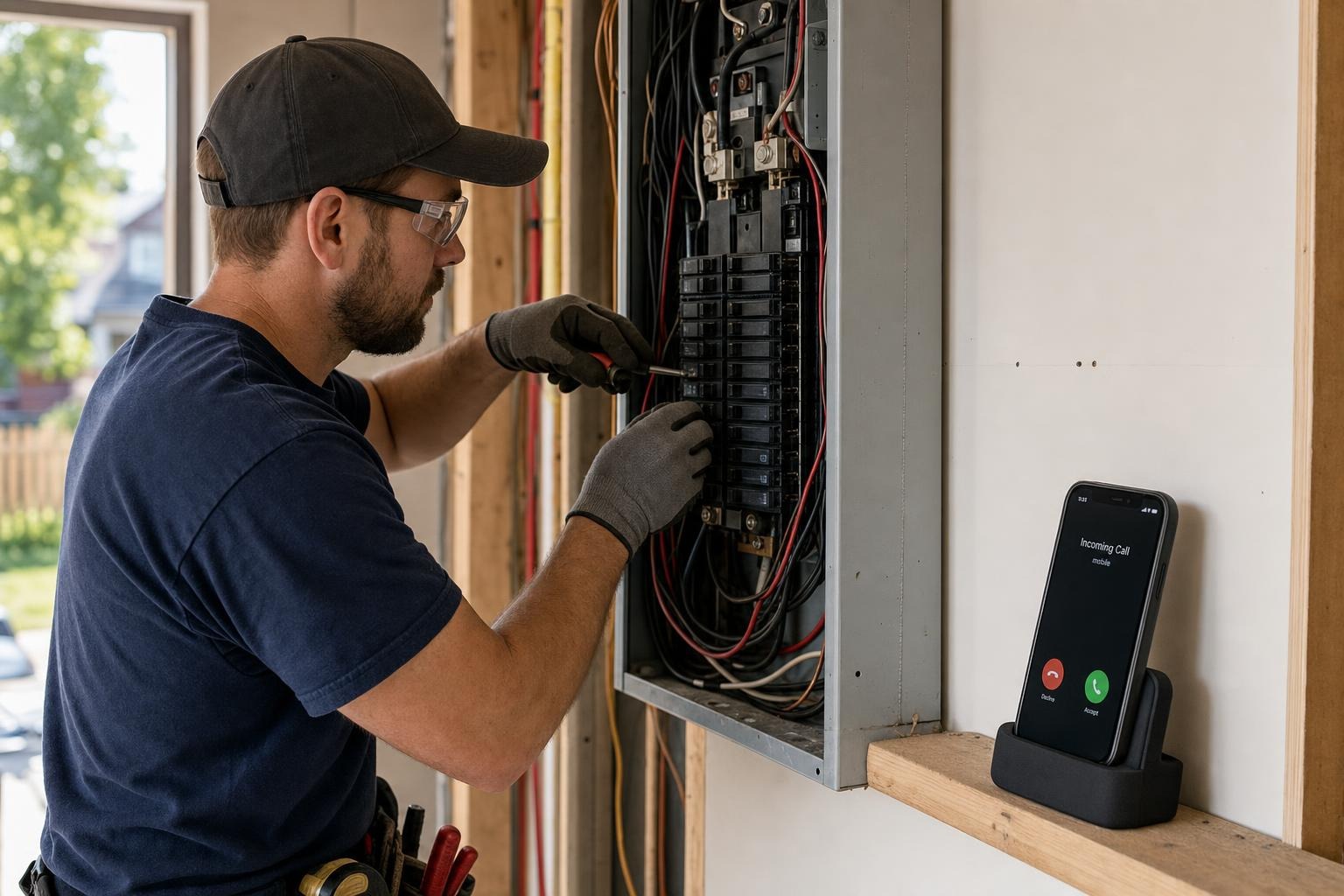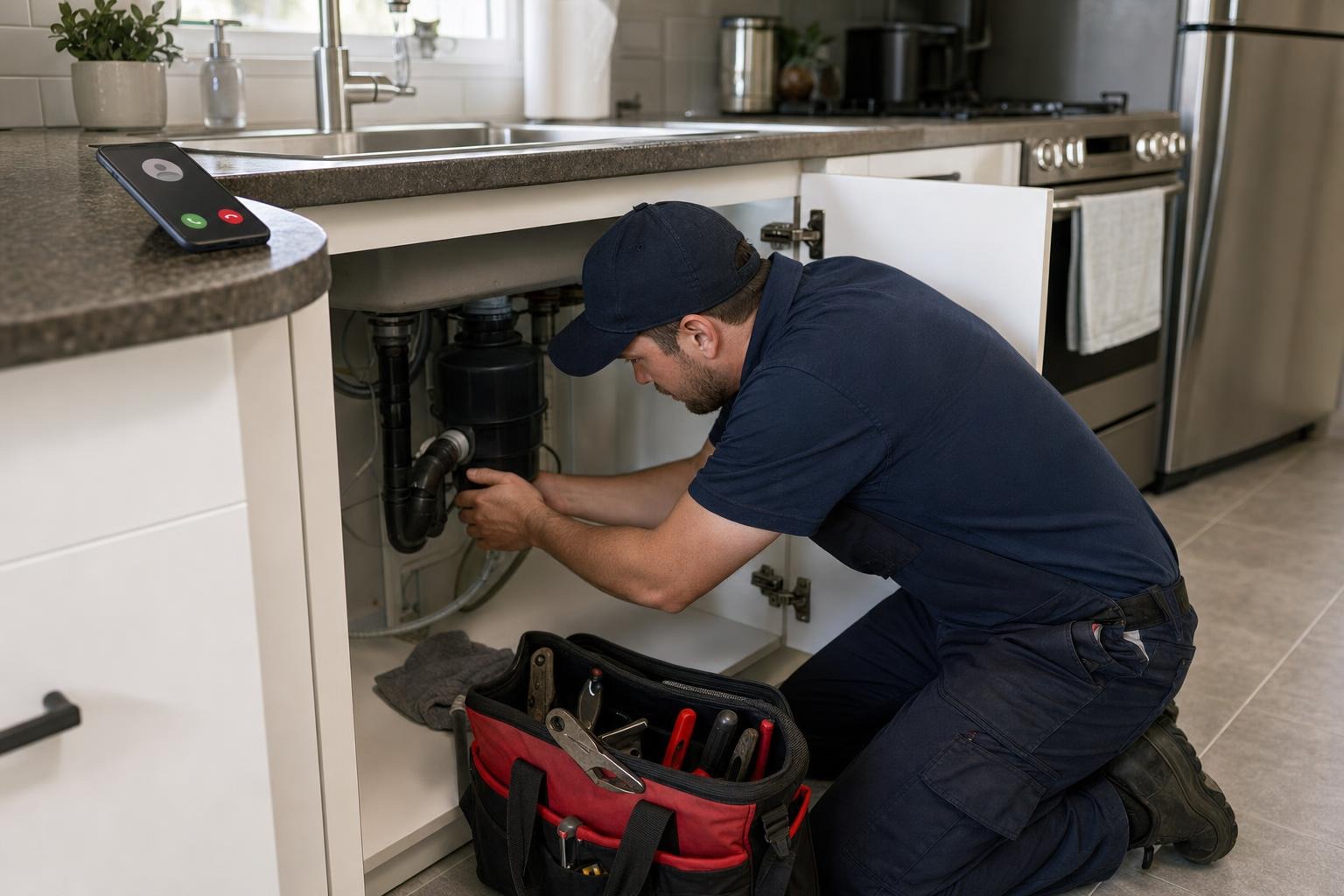
When a homeowner calls a plumber, electrician, HVAC contractor, roofer, or general tradesperson, they usually want a practical answer: Can you help, and when can you come? Responding immediately keeps that conversation moving while the caller is ready to explain the problem and provide an address.
That matters especially for sole proprietors. A contractor working under a sink in Westdale, on a roof in Stoney Creek, or inside a mechanical room in Waterdown cannot safely stop whenever the phone rings. If nobody answers, however, the caller may leave a voicemail, try another business, or put off the work entirely.
A fast response does not guarantee a booked job. It does remove one of the most avoidable barriers between an inbound enquiry and a confirmed appointment. The strongest call-handling process combines speed with accurate intake, realistic expectations, and a useful handoff to the person doing the work.
Key takeaways
- An immediate answer preserves the caller’s momentum before attention shifts elsewhere.
- Speed helps only when the call also captures the service need, location, contact details, and appropriate next step.
- Sole operators need coverage during jobs, driving, site visits, and other periods when answering personally is unsafe or impractical.
- A useful booking is better than a rushed promise that the contractor cannot keep.
- Performance should be judged by complete, accurate bookings—not answer speed alone.
Why the first seconds shape the call
An incoming trade call often starts with a specific problem. Water is leaking, a furnace is not heating, a breaker keeps tripping, or wind has damaged part of a roof. Even when the situation is not an emergency, the caller is trying to remove uncertainty.
An immediate answer establishes that the enquiry has reached an active business. The caller can begin explaining the issue instead of wondering whether the number is monitored. That reduces the opportunity for the search to restart with another contractor.
Voicemail creates more work on both sides. The caller has to summarize the problem without knowing which details matter. The contractor must listen, call back, and potentially leave another message. A simple enquiry can become several disconnected contacts before anyone establishes the service type, address, or timing.
For a sole operator, this is not evidence of poor service. It is a capacity problem. The same person may be diagnosing equipment, carrying materials, speaking with a customer, or driving between Hamilton neighbourhoods. Reliable call coverage separates the act of receiving an enquiry from the physical availability of the tradesperson.
Response time also sets the tone for the rest of the interaction. A caller who is greeted promptly can be guided through a short, orderly intake. The objective is not to rush them. It is to use the moment when they are already engaged.
What a fast trade call should accomplish
The answer itself is only the opening. A productive call should turn an unstructured description into information the contractor can use.
At minimum, that usually means capturing:
- The caller’s name and callback number.
- The property address or service area.
- The type of trade or service required.
- A concise description of the issue.
- The preferred or required timing.
- Any access detail the contractor needs before arrival.
- The next step agreed with the caller.
The questions should reflect the trade. A plumbing enquiry might require the location of a leak and whether the water has been shut off. An HVAC call could distinguish no heat from unusual noise or routine service. A roofing enquiry may need the property location and a basic description of visible damage. The call handler should gather context without attempting unsupported diagnosis.
The outcome must also be clear. “Someone will get back to you” leaves both sides uncertain. A booked time, a defined callback window, or an explicit escalation gives the caller a concrete expectation. If the call results in a booking, sending the contractor the address reduces the need to replay a message or copy details while working.
volttus.ca is designed for Hamilton trades and answers in under two seconds, books the job, and texts the address to the tradesperson. It supports plumbers, electricians, HVAC contractors, roofers, and general trades across communities including Stoney Creek, Westdale, and Waterdown. The live phone experience can be tried free without signup.
Where sole operators lose response time
The obvious problem is a missed ring, but delays enter the workflow in several places.
A contractor may answer and ask the caller to hold, then lose the call while returning to the job. A voicemail may sit unheard until the end of the site visit. A handwritten address can be incomplete. A callback may reach the customer after they have arranged service elsewhere. Even an answered call can fail if nobody records what was agreed.
Driving deserves particular attention. Picking up a phone while moving is not a sensible solution to missed calls. Coverage should allow the contractor to keep travelling safely while the enquiry is received and organized.
Work conditions create similar constraints. Electricians may be working around energized equipment. Roofers may be at height. Plumbers may have both hands occupied in a confined space. HVAC technicians may be diagnosing a system while speaking with the customer on site. In each case, “answer every call personally” conflicts with the work itself.
There are also predictable gaps outside active job time: collecting materials, preparing estimates, invoicing, eating lunch, or cleaning up at the end of the day. Mapping these periods helps reveal whether missed calls are occasional exceptions or a structural part of the business day.
Fast answers versus good answers
Speed should never replace sound intake. A near-instant greeting followed by confusion, inaccurate promises, or missing details does not solve the caller’s problem.
The first trade-off is between booking and qualification. A broad request can sometimes be scheduled directly. Other calls require the contractor’s judgment before any commitment is made. The call process should distinguish between those paths rather than treating every enquiry identically.
The second trade-off concerns urgency. Callers may describe a situation as urgent, but a call handler should not invent a diagnosis or guarantee emergency availability. The safer approach is to capture the caller’s description accurately, follow the business’s approved routing rules, and state the next step plainly.
The third trade-off is conversational length. Gathering every imaginable detail can frustrate someone who only needs an appointment. Gathering too little creates a second round of questions. A short core intake, followed by trade-specific questions when relevant, keeps the call focused.
Accuracy matters most for names, phone numbers, addresses, dates, and time windows. These details should be confirmed back to the caller. A wrong street number can waste more time than a slow answer ever saved.
Texting also requires care. Appointment and address messages should serve the interaction the caller initiated. If a business later wants to send promotional electronic messages, it should review the consent and identification requirements under Canada’s Anti-Spam Legislation guidance from the CRTC. Operational messages and marketing campaigns should not be treated as interchangeable.
A practical call-handling workflow
A dependable system starts before the phone rings. The owner must decide which services can be booked, which require review, where the business works, and what should happen when a request falls outside those boundaries.
1. Define the service area
List the neighbourhoods and surrounding communities the business actually serves. For a Hamilton operator, that may include selected areas from Stoney Creek through Westdale and Waterdown. Clear boundaries prevent bookings that create impractical travel or cannot be fulfilled.
2. Separate bookable calls from review calls
Identify common jobs that can move directly to an available time. Create a second route for unusual requests, uncertain scope, or work that requires the contractor’s assessment. This protects the schedule without abandoning the caller.
3. Build a short intake sequence
Start with the caller’s need, then collect the address and contact details. Ask only the questions required to choose the next step. Confirm critical information aloud before ending the call.
4. Set honest scheduling rules
Availability should reflect the contractor’s real calendar. Avoid vague promises and do not offer times that depend on unrealistic travel between jobs. Include enough space for work that routinely runs longer than expected.
5. Deliver a usable handoff
The contractor should receive a concise summary containing the name, phone number, address, issue, timing, and agreed action. The summary needs to be readable at a glance when the contractor becomes available.
6. Create an exception path
Not every call will fit the standard process. Decide what happens with out-of-area enquiries, services not offered, unclear requests, schedule conflicts, and calls requiring personal review. A controlled exception is better than an improvised commitment.
7. Review the process regularly
Look for repeated friction. If callers frequently ask about a service that cannot be booked directly, the intake rules may need refinement. If addresses are often corrected later, confirmation needs more attention. The script should evolve from real operational patterns without becoming bloated.
How to evaluate call-handling performance
Answer speed is easy to understand, but it is not the only useful measure. A trade business should review the full journey from ring to completed next step.
Useful operational questions include:
- Was the call answered rather than sent to voicemail?
- Did the caller reach a clear outcome?
- Were the phone number and address captured correctly?
- Was the job appropriate for the trade and service area?
- Was the promised time consistent with actual availability?
- Did the contractor receive enough information to act?
- How often did a booking require correction or another intake call?
These questions distinguish activity from value. A high number of answered calls is not automatically helpful if the resulting bookings are incomplete. Conversely, a review call can still be successful when it records the right information and sets an honest expectation.
A small operator does not need an elaborate reporting system. A weekly review of missed calls, booked jobs, incomplete details, cancellations, and out-of-scope enquiries can expose the main weaknesses. The purpose is to improve the workflow, not create administrative work for its own sake.
Practical next steps for a Hamilton trade business
Begin with one ordinary workweek. Note when calls arrive, which ones are missed, how long callbacks take, and what information is repeatedly requested. Pay particular attention to periods spent driving or doing hands-on work.
Next, write the minimum booking rules: services covered, geographic boundaries, working hours, scheduling limits, and reasons a call must be referred to the owner. Test those rules against several realistic scenarios, such as a leaking fixture in Westdale, a no-heat call in Waterdown, or a roofing enquiry from Stoney Creek.
Finally, test the caller experience from beginning to end. Check whether the phone is answered promptly, the questions sound natural, the booking is accurate, and the address reaches the contractor in a useful form. Any weak point between the greeting and the handoff deserves as much attention as the initial response time.
Frequently asked questions
Does every call need to become a booking?
No. Some requests will be outside the service area, beyond the business’s scope, or dependent on the contractor’s review. Good handling produces the correct next step, which may be a booking, a scheduled callback, or a clear explanation that the work cannot be accepted.
Is voicemail enough for a sole tradesperson?
Voicemail is better than losing the caller’s message completely, but it adds delay and creates a callback loop. It also depends on the caller leaving a complete, understandable message. Live, structured intake can capture the required details during the initial contact.
Should the person answering diagnose the problem?
Not unless that person is qualified and authorized to do so. Call intake should record what the caller reports, ask approved clarifying questions, and route or book the enquiry according to established rules. It should not create certainty where the contractor has not assessed the work.
What information should be confirmed before ending the call?
Confirm the caller’s name, callback number, property address, appointment or callback timing, and the agreed next step. Repeat spelling or numbers when there is any uncertainty.
Can an AI secretary handle calls while the contractor is driving or working?
An AI secretary can provide call coverage during those periods when configured for the business’s approved services, area, and scheduling rules. The process still requires thoughtful setup, accurate availability, exception handling, and periodic review by the owner.