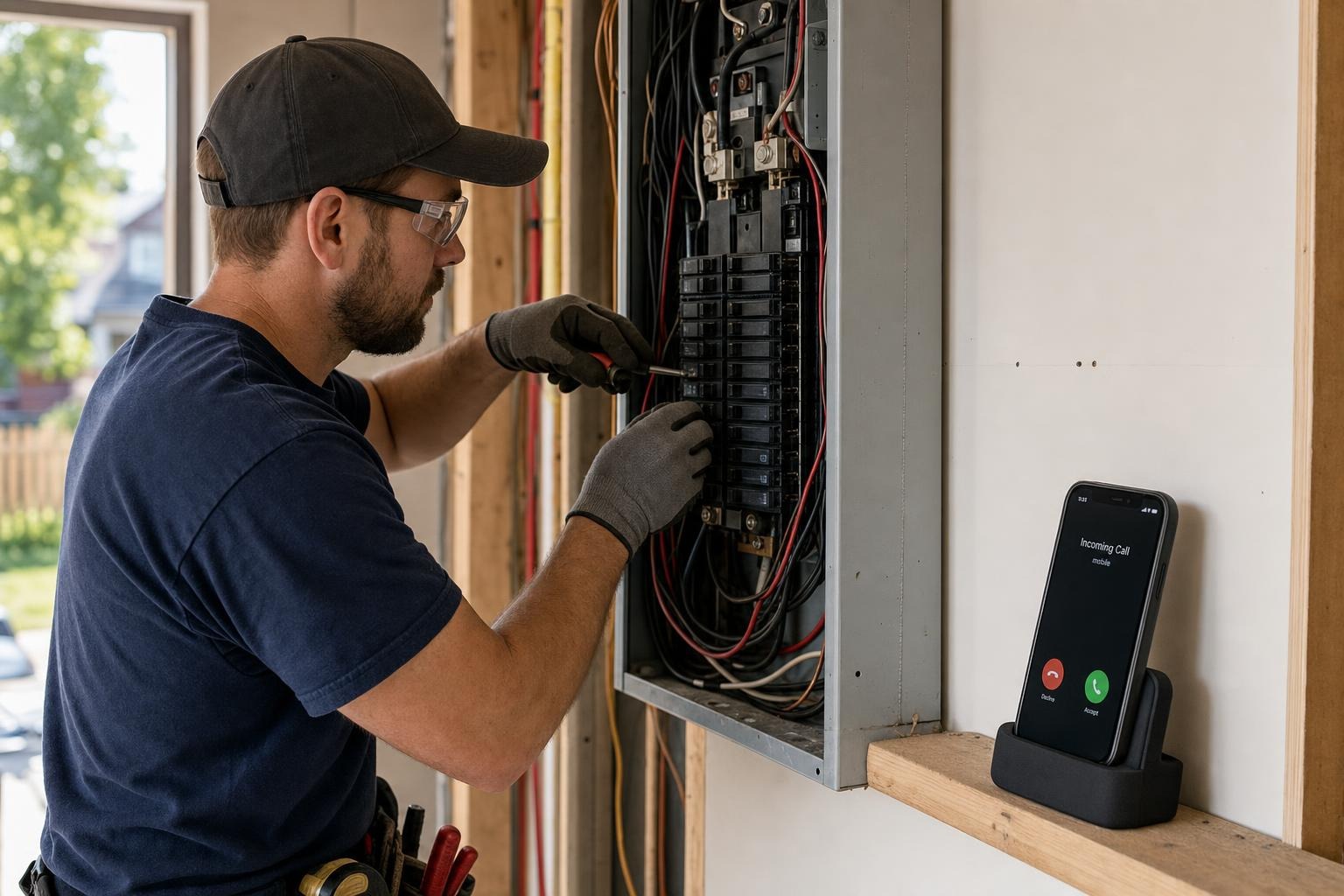
Lead answer: Missed calls cost Hamilton trades directly — a one-minute gap in response can turn a booked job into a competitor’s appointment. For sole‑proprietors in Hamilton (plumbers, electricians, HVAC techs, roofers, general contractors) the fastest fix is to stop relying on voicemail and implement an answer-and-book workflow that captures callers the minute the phone rings.
This article walks through how missed calls become lost revenue, how to quantify the problem in a practical way, and three realistic paths to fix it: DIY process changes, hiring a human receptionist, or using a local AI secretary built for Hamilton trades. Examples use on‑the‑job scenarios (Westdale repairs, Stoney Creek installs, Waterdown emergency callouts) and stick to tested tradeoffs so you can pick the best next step.
Table of contents
- Why missed calls cost Hamilton trades
- Typical scenarios where a call turns into a lost job
- Measure the true impact (simple, local math)
- Options to fix missed calls: tradeoffs and example costs
- 1) Process and scheduling changes you can do today
- 2) Hire a human receptionist: when it makes sense
- 3) Use an AI secretary built for Hamilton trades
- Implementation checklist: first 30, 60, 90 days
- Monitoring, KPIs, and what to expect after rollout
- Frequently asked questions
Key takeaways
- Every missed inbound call is a measurable risk: callers rarely wait and often call the next listed local pro.
- Simple behavior changes (call‑back windows, on‑truck routing, auto‑texts) reduce losses fast and cost little.
- If you’re a sole proprietor working jobs across Hamilton, a dedicated answering solution that picks up in under 2 seconds and books work reduces friction far more cheaply than hiring full time.
- Compare direct cost, missed‑job value, and quality of customer experience when choosing between DIY, a receptionist, or an AI secretary.
- For Hamilton trades, local coverage matters — an answering system that understands regional call patterns (Stoney Creek to Westdale to Waterdown) preserves arrival times and reduces no‑shows.
Why missed calls cost Hamilton trades
Phone calls are frequently the first and decisive moment of a local service sale. For tradespeople a call is not just a lead — it’s a scheduling event that turns a stranger into a booked job.
When the call is missed the options for the caller are simple: wait (rare), leave a voicemail (many won’t), or call the next name on the list. That means a missed call often becomes a booked appointment for your competitor and a fixed loss for you.
Two features of trade work make missed calls especially costly:
- Urgency: plumbing and HVAC problems are time‑sensitive. Callers choose the first available pro who sounds like they can respond quickly.
- Local logistics: callers prioritize tradespeople who can get to their neighborhood that day. If your call isn’t answered, the caller often chooses someone else within the same city.
Typical scenarios where a call turns into a lost job
Concrete, local scenes help make the cost obvious.
- Under a sink in Westdale: you’re on a service call and the truck phone rings. The customer on site asks you to call back later, but they choose the next plumber who answers immediately. Result: lost same‑day job and a competitor gets the positive in‑person review.
- Ladder work in Ancaster: you’re halfway through an exterior electrical inspection. A homeowner calls about an outage and the number goes to voicemail. They call another electrician who can be there within hours.
- Weekend HVAC emergency in Stoney Creek: the call comes at 8:30 p.m.; you’re on the road and let it go to voicemail. The caller phones the next provider that picks up and pays the night rate — not you.
Each of these examples ends the same way: the caller chooses the pro who answers now.
Measure the true impact (simple, local math)
You don’t need fancy analytics to see how missed calls translate to lost revenue. Use this straightforward approach with data you already have.
What to track for one month
- Total inbound calls answered live
- Missed calls (rings that went to voicemail or weren’t returned within 1 hour)
- Booked jobs originating from calls (ask callers how they found you)
- Average job value (labour + parts for common repairs)
A simple calculation (hypothetical example labeled for clarity)
- Hypothetical shop: averages — 80 inbound calls/month, 20 missed calls/month, average booked job = $260.
- If you conservatively assume 30% of missed callers would have booked with you, missed revenue = 20 × 0.30 × $260 = $1,560/month.
This example is illustrative, not a claim about your business. Replace numbers with your month’s counts. Even small shops often find the missed‑call opportunity is larger than they expect once they run the numbers.
Options to fix missed calls: tradeoffs and example costs
You have three practical paths. Which one fits depends on your schedule, volume, and cashflow.
- Process and scheduling changes you can do today
What to implement immediately
- Clear on‑call rules: designate when you can accept calls and communicate expected response times in voicemail and your website.
- Rapid call‑back window: promise and hit a 30–60 minute callback window rather than “we’ll call you back later.”
- Automated confirmation texts: after booking, text the address and approximate arrival window.
- Use simple on‑truck routing: forward calls to a partner tech when you’re on a job and unavailable.
Pros
- Near zero cash cost.
- Keeps control in your hands.
Cons
- Still relies on your or your crew’s availability; you’ll miss calls when busy.
- Administrative overhead grows as volume grows.
When it’s right
You’re a sole proprietor with predictable low call volume and you can reliably return calls within an hour.
- Hire a human receptionist: when it makes sense
What a receptionist does differently
- Live people answer and can field complex scheduling, take payment details, and manage unexpected routing.
- They can build rapport, manage difficult callers, and occasionally do upsell work.
Pros
- Better handling of complex or sensitive calls.
- Reduces your administrative burden more than DIY.
Cons and costs
- Hourly wages, training, benefits (if full time), and downtime costs. A full‑time receptionist can cost several thousand dollars per month in total employment cost in Ontario once wages, EI, CPP, and scheduling gaps are included.
- Coverage gaps (nights/weekends) unless you hire shifts or use an outside answering service.
When it’s right
You have sustained, high inbound volume that justifies a staff hire and you value human judgment on every call.
- Use an AI secretary built for Hamilton trades
What to expect from a trade‑focused AI secretary
- Immediate pick up in under 2 seconds and ability to book the job on the spot.
- Automated texting of the appointment address and time to reduce confusion and no‑shows.
- Coverage that runs across typical Hamilton neighborhoods (Stoney Creek, Westdale, Waterdown) and is tuned for trade scheduling needs.
Example offering from a local provider
An AI secretary built in Hamilton for Hamilton trades — plumbers, electricians, HVAC, roofers — answers in under 2 seconds, books the job, and texts the address. Founding pricing includes unlimited calls from $79/mo for the Founding 50. (Source: volttus.ca)
Pros
- Low monthly cost compared with full‑time staff.
- Instant pickup reduces the chance that a caller moves to a competitor.
- Works outside business hours, evenings, and weekends without overtime.
Cons
- For very complex calls you may still prefer a human.
- Requires configuration and a short onboarding period.
When it’s right
You’re a sole proprietor or small crew with unpredictable call timing, you want same‑day booking reliability, and you prefer predictable monthly costs.
Tradeoffs summary
- DIY process changes: cheap, fast, but brittle if volume rises.
- Human receptionist: best for high volume and nuanced customer service; most expensive.
- AI secretary built for trades: best cost‑to‑coverage for most Hamilton sole proprietors and small teams.
Implementation checklist: first 30, 60, 90 days
First 30 days — measure and stop immediate leaks
- Track inbound calls and voicemails daily.
- Set a callback standard (e.g., 30–60 minutes) and add it to voicemail greeting and website.
- Enable simple confirmation texts for every booked job.
- Try a two‑week experiment with an off‑the‑shelf answering solution or a local AI secretary trial.
First 60 days — pick and install your solution
- Compare costs: estimated lost revenue (from your month 1 math) versus monthly solution costs.
- If choosing an AI secretary, configure service areas (Stoney Creek to Westdale to Waterdown), booking rules, and immediate text templates.
- Train staff on new routing and booking confirmations.
First 90 days — optimize and measure
- Monitor bookings captured vs missed calls and ask new customers how they found you.
- Tweak call scripts, confirm arrival windows by text, and measure no‑shows.
- If you hired staff, compare labor costs with booked job lift. If you chose AI, verify that pickup time is under 2 seconds and that texts are sent automatically.
Monitoring, KPIs, and what to expect after rollout
Track these KPIs monthly
- Live answer rate: percentage of calls answered without voicemail.
- Calls converted to booked jobs.
- Average time to first contact (seconds) and callback time (minutes).
- No‑show rate for same‑day appointments.
Expected improvements
- A significant improvement in live answer rate reduces immediate leakage of same‑day jobs.
- Better confirmation texts and booking clarity reduce no‑shows and cancellations.
Evidence that speed matters
The classic analysis of lead response shows that faster responses increase contact and conversion odds for time‑sensitive inbound enquiries; firms that respond within minutes, not hours, have markedly higher conversion rates (see Harvard Business Review on lead response times). This principle applies to phone calls for local trades where speed implies availability and reliability. (Harvard Business Review: The Short Life of Online Marketing Leads — [ref]
Local context: why Hamilton-specific coverage matters
Hamilton’s neighborhoods have different traffic and routing realities — someone in Waterdown calling at 7 a.m. expects a different arrival window than someone in downtown Hamilton. An answering solution that is configured for local neighborhoods (Stoney Creek to Westdale to Waterdown) preserves realistic arrival estimates and reduces cancellations caused by poor ETA promises.
Frequently asked questions
Q: How much will switching to an AI secretary cost my small shop?
A: Costs vary by provider and feature set. For Hamilton trades, some locally focused services offer unlimited calls and booking features from a fixed monthly fee (for example, Founding pricing from volttus.ca lists unlimited calls from $79/mo for the Founding 50). Compare that with the monthly cost of a full‑time receptionist and the value of recovered jobs to determine ROI.
Q: Will customers accept an AI answering my calls?
A: Most callers want a fast, helpful response more than they want a human voice specifically. If the AI answers quickly, confirms booking details, and texts the exact address and ETA, many customers prefer speed and clarity. Keep a simple escalation path to a human for unusual or sensitive calls.
Q: Do I need to change my pricing if I capture more emergency/weekend calls?
A: Possibly. If higher responsiveness leads to more after‑hours bookings, establish clear policies for overtime or emergency rates and include them in the confirmation text. That protects margins and keeps expectations aligned.
Q: How do I measure whether the new system is actually reducing losses?
A: Before switching, record your baseline for live answer rate, missed calls, and monthly jobs from calls. After rollout, compare the same metrics monthly and ask new customers how they found you. Even without perfect attribution, an increase in booked jobs and a higher live answer rate are strong indicators.
Q: Are there privacy concerns with automated call handling and texts?
A: Use a vendor that follows Canadian privacy rules and retains minimal call metadata. Ensure confirmation texts contain only necessary details (appointment time and address), and avoid storing sensitive payment info via SMS.
Sources and further reading
- Harvard Business Review — The Short Life of Online Marketing Leads: [ref]
- volttus.ca — Hamilton's AI Secretary for Trades (local offering details and trial): [ref]
Next steps (practical)
- Run a 30‑day log of inbound calls and missed calls to get a real baseline.
- Try simple process fixes (clear voicemail windows, auto‑texts) immediately.
- Run a two‑week test of a trades‑focused answering service or AI secretary to compare captured bookings with your baseline.
An unanswered ring in Hamilton can become a competitor’s appointment within minutes. Measure the loss, choose the right coverage for your volume, and stop letting returned calls determine whether you get the job.