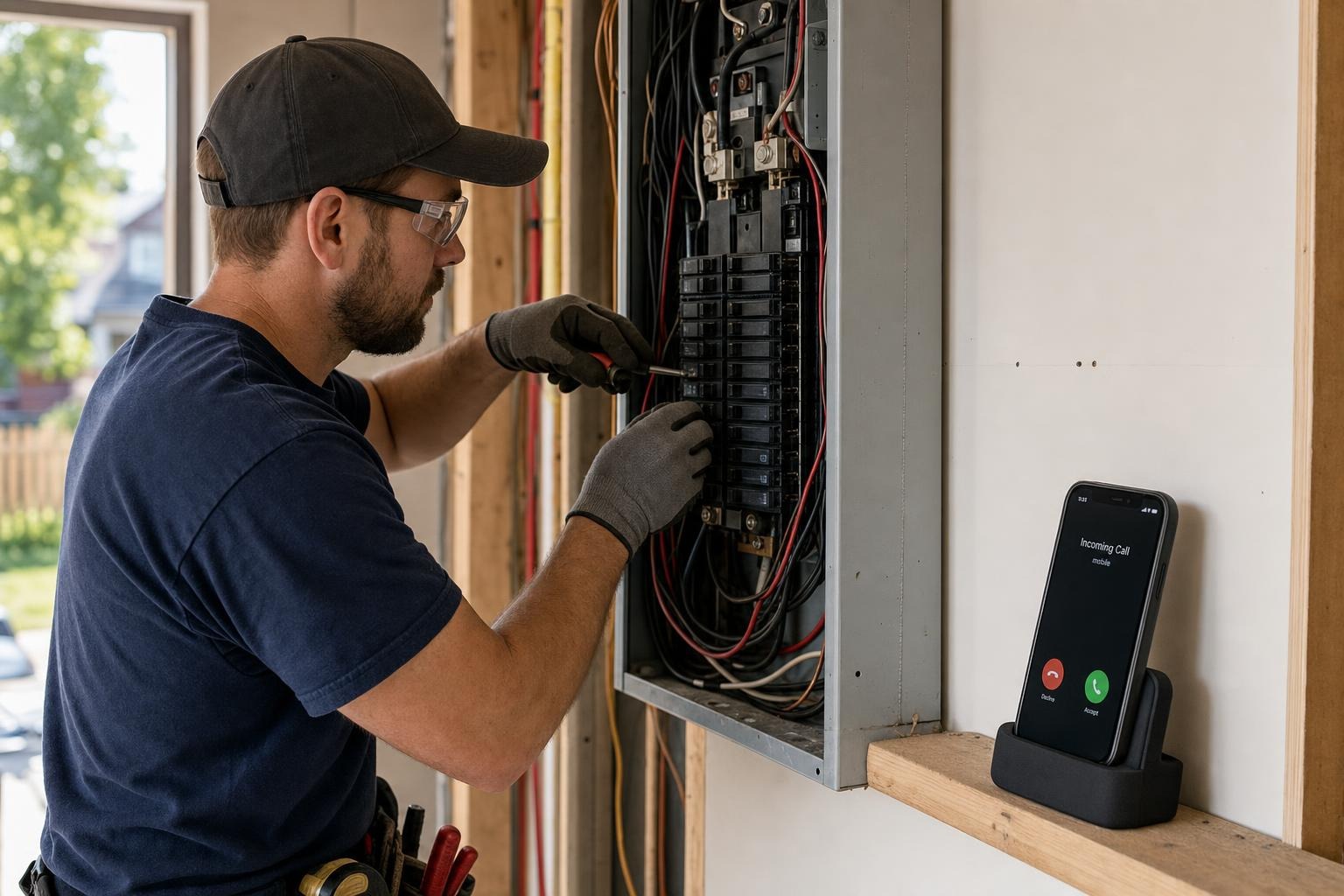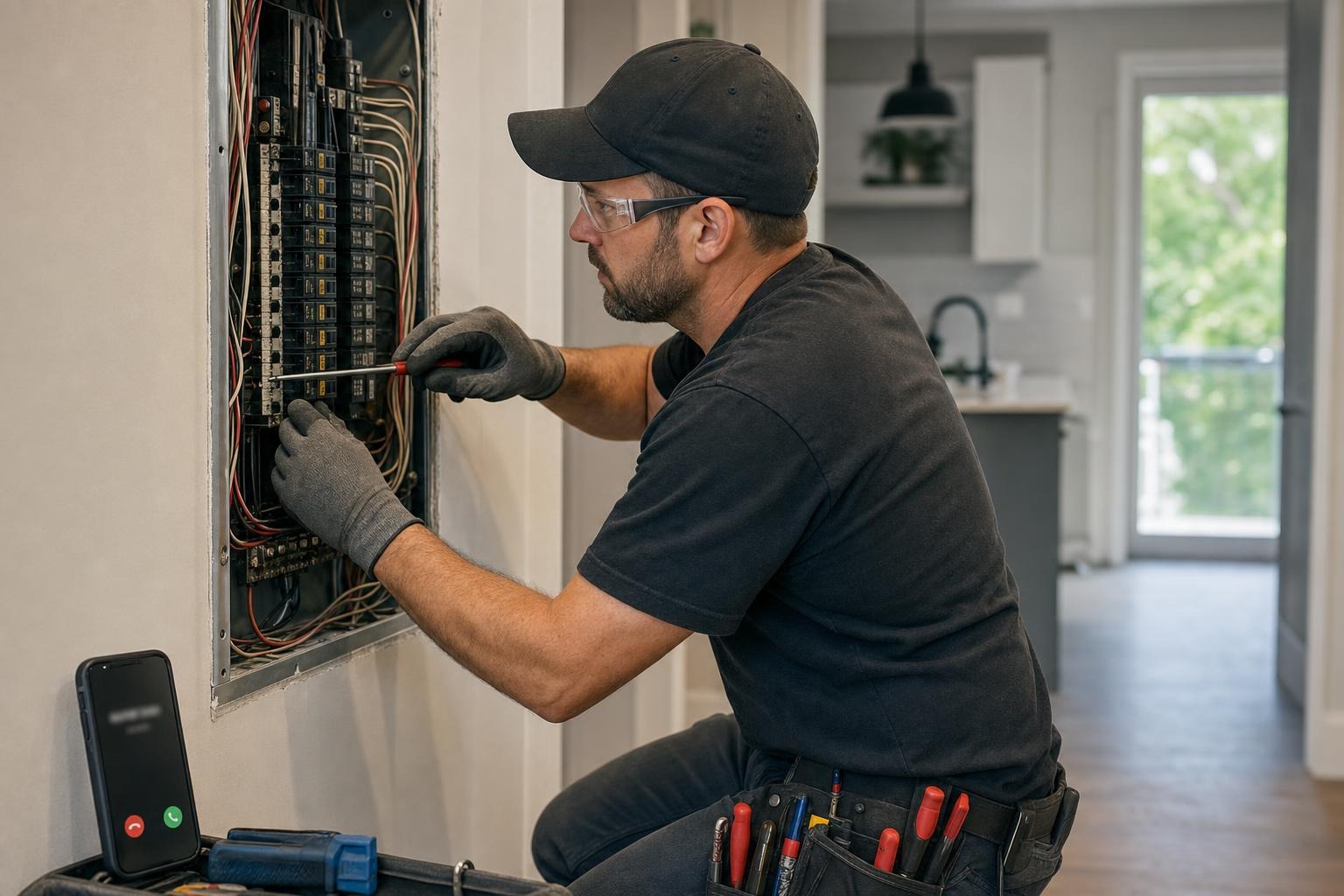
A ringing phone should not force a sole proprietor to choose between the customer already on site and the customer trying to book the next job. The practical answer is to create a small call-handling system: decide when not to answer, capture the caller’s essential details consistently, and set a reliable backup for the moments when your hands cannot leave the work.
This matters on a typical day across Hamilton. A plumber may be under a sink in Westdale. An electrician may have a panel open in Stoney Creek. A roofer may be on a ladder in Ancaster. Even when the phone is within reach, answering it can be unsafe, disruptive or unprofessional.
The goal is not to answer every call personally. It is to make sure every call enters a dependable process, whether that process involves a safe callback, another person or an automated answering option.
Key takeaways
- Establish clear no-answer conditions for driving, ladder work, live electrical work and other tasks that require full attention.
- Collect the caller’s name, number, location, service needed and preferred timing before discussing secondary details.
- Use one intake script so that hurried conversations still produce usable job information.
- Give missed calls a specific follow-up window instead of relying on memory at the end of the day.
- Review call outcomes weekly to identify gaps without creating a burdensome office routine.
Why incoming calls are difficult on site
For an owner-operator, the same person often performs the work, drives the van, estimates jobs, buys materials and answers customer questions. Incoming calls do not arrive according to that schedule. They arrive during noisy equipment use, delicate repairs, conversations with current customers and travel between locations.
The problem is larger than a missed ring. If the caller leaves no message—or provides only a first name—the contractor may have no practical way to qualify the opportunity. If a call is answered hastily, important details such as the service address or access problem can be misunderstood. The phone was technically answered, but the handoff still failed.
Frequent interruptions also affect the job in progress. Stopping midway through a diagnostic sequence can make it necessary to retrace steps. Taking a long sales conversation in front of a paying customer can make that customer feel secondary. On hazardous tasks, looking away from the work is not a reasonable option at all.
A good routine therefore needs to protect both sides: the customer already receiving service and the person trying to reach the business.
Build a three-part phone routine
A workable routine covers three moments: before the job starts, while work is underway and immediately after the work reaches a safe stopping point. Each step should be simple enough to repeat on a busy day.
Before starting the task
Set the phone to the appropriate sound or vibration level, but do not place it where reaching for it creates a hazard. Confirm that voicemail, a designated person or an answering system is ready to receive calls. If callbacks will be necessary, reserve a realistic window for them in the day rather than assuming they can all wait until evening.
For example, an HVAC contractor entering a mechanical room could check that call coverage is active before putting on hearing protection. A roofer can make the same check before climbing rather than reacting to a vibration while already on the ladder.
While work is underway
Follow predetermined no-answer rules. Do not make a fresh judgment for every ring. If the task involves height, moving equipment, live systems, traffic, confined positioning or a conversation that needs full attention, let the backup process take over.
During lower-risk work, answer only if you can pause cleanly. Open with a short line that sets expectations: “I’m on a job, but I can take the key details now.” That prevents a five-minute intake from expanding into a lengthy diagnosis attempted over the phone.
At a safe stopping point
Check what was captured. A useful message should identify who called, how to reach them, where the work is located and what they need. Return incomplete or time-sensitive inquiries first, then process routine estimates and non-urgent questions.
Treat this review as part of the job workflow, not an optional administrative task. A five-minute check after packing tools or before leaving the site is more dependable than trying to reconstruct the day several hours later.
Decide which interruptions can wait
A simple classification system removes guesswork. Calls can be divided into three groups based on what you are doing when the phone rings.
Do not answer: This category includes driving, ladder or roof work, active electrical work, handling equipment, working in an awkward position and any task where divided attention could create a hazard. It also includes situations in which taking out a phone could contaminate gloves or the work area.
Answer briefly if the task is safely paused: This may include waiting for a test cycle, standing in a clear work area or completing paperwork while stationary. Keep the conversation to intake details and avoid troubleshooting a system you cannot inspect.
Answer normally: Use this category when you are already in an administrative block, safely parked or between tasks with adequate time to understand the request.
The categories should apply consistently. If “do not answer” changes whenever business is slow, it is not a safety rule; it is a temptation. Reliable coverage makes it easier to leave the phone alone when the work requires it.
Use a consistent intake script
The first conversation does not need to solve the technical problem. It needs to produce enough accurate information to decide what happens next. A short script can cover that purpose:
- What is your name and the best number for a callback?
- What is the service address or neighbourhood?
- What type of work do you need?
- What is happening now, in the caller’s own words?
- Is there an immediate safety concern?
- When can someone access the property?
- What is the preferred appointment timing?
Ask for the callback number even when caller identification displays one. The person may be calling from a work phone, a relative’s device or a number they do not monitor. Repeat the address and phone number back to reduce avoidable errors.
Avoid promising an arrival time, price or repair outcome unless those commitments can actually be confirmed. “I’ll review the schedule and call you back” is more useful than creating an expectation based on incomplete information.
For safety-related statements, keep the boundary clear. Record what the caller reports and direct them to the appropriate emergency service when the situation requires one; do not attempt a remote diagnosis merely to keep the call moving. The purpose of intake is an orderly handoff, not a substitute for inspection.
Choose a backup that can complete the handoff
Voicemail is the simplest backup, but it works only when the greeting gives the caller useful instructions and messages are checked on schedule. Ask for the caller’s name, callback number, location and reason for calling. Keep the greeting short enough that a person with an active leak, loss of heating or electrical concern reaches the recording promptly.
A spouse, dispatcher or trusted colleague can provide a more conversational response, but that person needs the same intake checklist. Otherwise, the contractor may receive a note that says only “customer needs a quote,” with no address or service details.
An answering service or automated option can create more consistent coverage when no team member is available. Evaluate any option by what happens after it answers. Does it gather the required information? Can it book the job within the boundaries you set? Does it send the address in a form you can use between appointments? A fast pickup is valuable only when the resulting handoff is complete.
Volttus is an AI secretary built in Hamilton for Hamilton plumbers, electricians, HVAC contractors, roofers and general trades. It answers in under two seconds, books the job and texts the address to the contractor. Its live phone demonstration is available without signup. That model is intended for sole proprietors who need calls handled while their hands and attention remain on the work.
Whichever backup you choose, test it with realistic scenarios. Call as a homeowner requesting a routine estimate, a tenant who does not know the unit’s technical details and a property manager coordinating access. The test should reveal whether the handoff contains enough information to act—not merely whether someone or something answered.
Keep driving separate from call handling
Travel time may appear to be an opportunity to clear calls, but handling a device while driving creates an unnecessary risk. Ontario’s distracted-driving guidance explains that drivers cannot use hand-held communication and entertainment devices while driving, including while stopped at a red light.
The cleanest operating rule is to let coverage handle incoming calls and review the details after parking safely. Before moving again, set the destination and put the phone away. If a captured address is incomplete, resolve that issue while stationary rather than attempting to correct it in traffic.
Build small parking buffers into the schedule where possible. Two planned minutes at the end of a visit can be used to check the next address and identify a callback. That is more controlled than turning every drive into an improvised dispatch session.
Review the system without adding paperwork
A weekly ten-minute review is enough for a small operation. The purpose is to find recurring failures, not to build a complex reporting system. Look at a manageable set of questions:
- How many calls lacked a usable callback number or address?
- Which inquiries waited longer than intended for a response?
- Were appointments booked with enough information to prepare?
- Did any call interrupt work that should have been protected?
- Are the same customer questions consuming time repeatedly?
Use the answers to make one small adjustment. If addresses are frequently missing, change the intake order so location is requested earlier. If callers expect an instant estimate, revise the opening language to explain that job details will be reviewed before pricing. If callbacks accumulate at the end of the day, add a short midday review point.
Do not judge the system solely by how many calls were answered. A better measure is whether legitimate inquiries became clear next steps without compromising the current job. That next step might be a booking, a scheduled callback, a request for more information or a decision that the work is outside the contractor’s scope.
The routine should also remain proportionate to the business. A sole proprietor does not need an elaborate call centre process. Clear no-answer conditions, five or six intake questions, dependable coverage and scheduled follow-up can remove much of the uncertainty.
Frequently asked questions
Should a tradesperson answer every call immediately?
No. Calls should not be answered when doing so would make the task unsafe, interrupt a critical work sequence or diminish an important conversation with the customer on site. The better goal is immediate, reliable capture followed by an appropriate response.
What information is essential for a new service inquiry?
At minimum, collect the caller’s name, callback number, service location, type of work, brief description of the issue and preferred timing. Access details and any reported safety concern may also be necessary. Technical history can usually wait until the contractor has time to assess it properly.
Is voicemail enough for a sole proprietor?
It can be, provided callers receive clear instructions and messages are checked at predictable intervals. Voicemail becomes less effective when the greeting is vague, the mailbox is full or callbacks depend on remembering to check at the end of a long day.
How quickly should a missed call be returned?
Set a response window that the business can consistently meet instead of making an unsupported promise. During active work, that could mean checking captured details at the next safe break. Communicate the expected process in the greeting or initial response so the caller knows what happens next.
How can calls be handled without disrupting the current customer?
Use predetermined no-answer rules and a backup system, then reserve short callback blocks between jobs. If a call must be taken, tell the current customer briefly, step to an appropriate place and limit the conversation to essential intake details. This protects the appointment while ensuring the new inquiry is not forgotten.